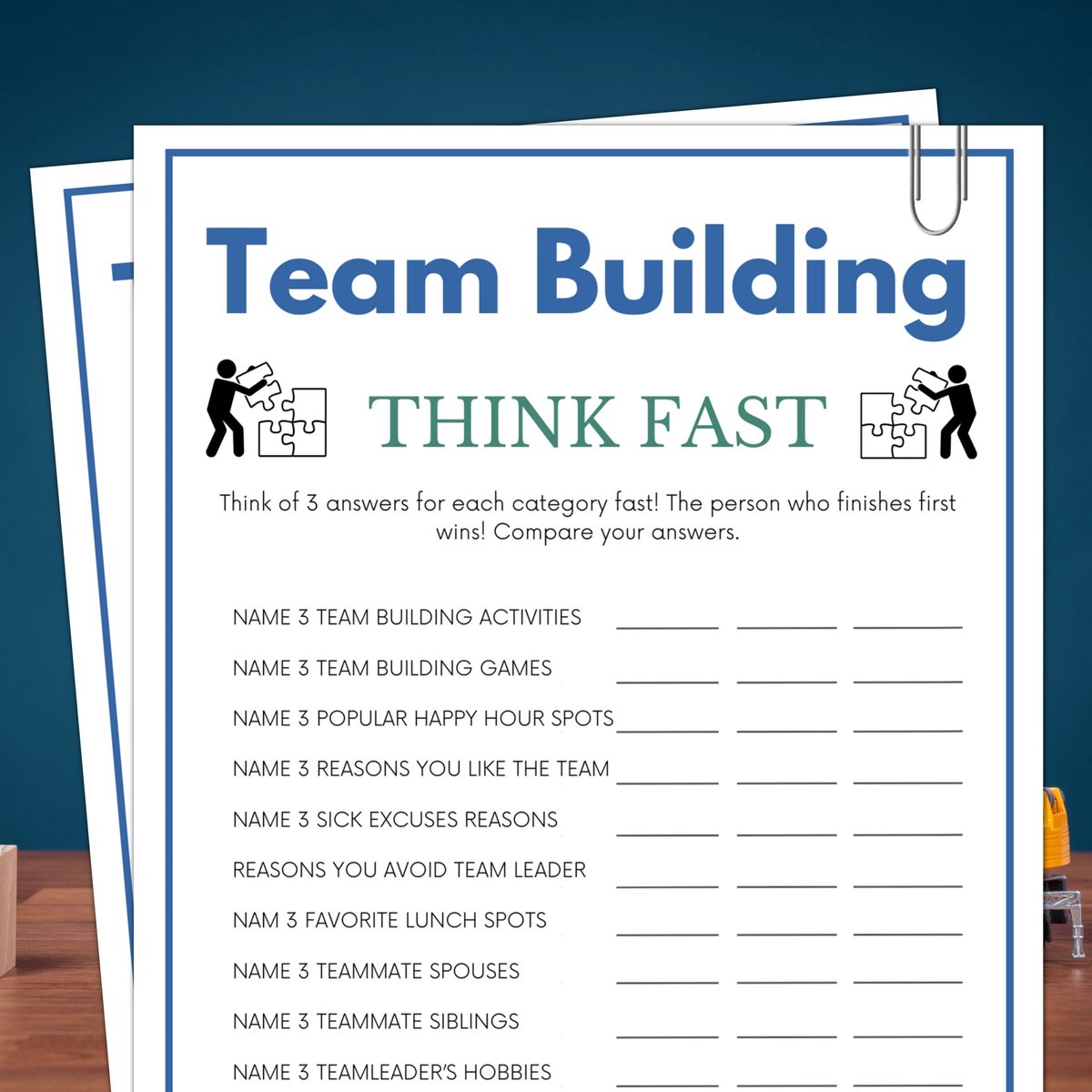
Ever found yourself in a new team, or even an old one, wishing there was a shortcut to genuine connection? The truth is, there isn't a shortcut, but there's a powerful tool that often gets overlooked: the humble question. Thought-provoking team building and group activity questions aren't just for awkward icebreakers; they're the secret sauce for forging deeper relationships, sparking innovation, and creating a workplace where everyone feels heard and valued.
It's about more than just filling time in a meeting. When done right, these questions invite teammates to share a piece of themselves, reveal preferences, and ultimately, build the kind of trust that transforms a group of individuals into a high-performing unit.
At a Glance: Key Takeaways for Transforming Your Team
- Beyond the Obvious: Team building questions are more than icebreakers; they're strategic tools for rapport, communication, and productivity.
- Unlock Deeper Connection: They help coworkers understand each other's personalities, strengths, and interests on a more intimate level.
- Boost Performance: Stronger connections lead to improved communication, enhanced creativity, higher engagement, and smoother task completion.
- Tailor & Personalize: Customize questions to fit your team's unique interests and comfort levels, especially around pop culture or personal details.
- Facilitate, Don't Just Ask: Effective sessions require thoughtful preparation, active listening, and a safe environment for sharing.
- Many Categories: From introductory to philosophical, a diverse set of questions keeps things fresh and engaging for different goals.
The Unseen Power of a Simple Question: Why Bother?
Think about the best teams you've been a part of. Chances are, they weren't just efficient; they were connected. They understood each other's quirks, knew how to support one another, and could anticipate needs without a spoken word. This isn't magic; it's the result of intentional effort to build rapport and trust.
Team building questions are the conversational catalysts for this process. They move interactions beyond the purely transactional, inviting people to reveal their humanness. Research consistently shows that teams with higher psychological safety—where members feel safe to take risks, voice opinions, and even make mistakes—outperform those that lack it. And what's a cornerstone of psychological safety? Mutual understanding and trust.
When you ask a colleague what their favorite comfort food is, you're not just getting an answer; you're creating a micro-moment of connection. When you delve into their preferred communication style, you're setting the stage for more efficient collaboration. These questions are designed to:
- Build Rapport: Help coworkers get to know each other beyond their job titles.
- Increase Communication: Open channels for more natural, frequent, and honest exchanges.
- Boost Productivity & Engagement: Engaged individuals who feel connected are more motivated and contribute more.
- Ease Tension & Anxiety: Laughter and shared understanding can defuse stress and make the workplace feel safer.
- Stimulate Creativity: Diverse perspectives, once understood, can be leveraged to generate innovative solutions.
The beauty lies in their simplicity. Whether you're kicking off a virtual meeting, a project sprint, or an in-person workshop, a well-chosen question can instantly shift the dynamic, turning a room of individuals into a connected group.
Laying the Foundation: Introductory & "Meet the Team" Questions
Getting to know new team members or helping existing ones discover fresh facets of their colleagues is the first step. These questions are low-stakes, easy to answer, and perfect for initial introductions or warm-ups.
Breaking the Ice: First Impressions
These questions are ideal for new team members or when you're just starting to integrate a new group. They're designed to be non-intimidating and get people comfortable sharing.
- If you could have any superpower for one day, what would it be and why?
- What's one skill you're currently trying to learn or improve?
- What's the best piece of advice you've ever received?
- If you weren't in your current role, what would be your dream job?
- What's a fun fact about yourself that most people don't know?
- What's your go-to way to de-stress after a busy week?
- If you could instantly become an expert in anything, what would it be?
- What's a talent you have that has nothing to do with your job?
- What's one thing on your bucket list you hope to do this year?
- If you could trade places with any historical figure for a day, who would it be?
Beyond the Resume: Learning Quirks
Once the initial ice is broken, these questions invite a slightly deeper, more personal (but still comfortable) level of sharing, helping colleagues appreciate each other's unique personalities.
- What's your favorite way to start your day?
- If you had a personal mascot, what would it be and why?
- What's your favorite comfort food or drink?
- What’s a hobby you’ve always wanted to try?
- If you could only listen to one album for the rest of your life, what would it be?
- What’s the most interesting place you’ve ever visited?
- What’s your favorite thing about where you live?
- If you could learn any language fluently, which one would it be?
- What’s a small everyday luxury you can't live without?
- What's a book or movie that profoundly impacted you?
Building Bridges: Questions for Deeper Team Bonding
These questions move beyond superficial facts and aim to uncover shared interests, preferences, and experiences that can create stronger bonds and a sense of camaraderie. This is where you start to see genuine connections forming.
Shared Experiences & Preferences
Understanding what makes your colleagues tick outside of work can reveal common ground and foster a more empathetic work environment.
- What’s your all-time favorite movie genre?
- If you had to pick one cuisine to eat for the rest of your life, what would it be?
- What's your preferred season and why?
- Are you an early bird or a night owl? How does that affect your work habits?
- What's a skill you picked up during a past job that you still use today?
- What's your favorite form of exercise or physical activity?
- If you could live in any fictional universe, which one would you choose?
- What's one food you absolutely cannot stand?
- Do you prefer working alone or in a team, and why?
- What's a podcast or TV show you're currently obsessed with?
Lighthearted & Fun Engagement
Sometimes, the best way to bond is through shared laughter and playful imagination. These questions are designed to be purely fun and can lighten the mood significantly.
- If your life had a theme song, what would it be?
- What's the silliest thing you've ever done for fun?
- If you could invent a new holiday, what would it be about?
- What's a quirky habit you have?
- If you were a color, what color would you be and why?
- What’s the most obscure item you own?
- If you could bring back any fashion trend, what would it be?
- What’s your go-to karaoke song?
- If you had a warning label, what would it say?
- What’s the best joke you know?
Forging Strength: Trust-Building Questions
Trust is the bedrock of any successful team. These questions encourage vulnerability, help team members understand each other's motivations and challenges, and build a foundation for psychological safety. They often require a bit more thoughtful facilitation and a safe environment.
Understanding Perspectives & Beliefs
These questions help reveal the underlying logic and values that drive your colleagues, fostering empathy and reducing misunderstandings.
- What's one professional challenge you've faced recently and how did you overcome it?
- What's a common misconception about your role that you'd like to clear up?
- When do you feel most productive and energized at work?
- What's a value that's incredibly important to you, both personally and professionally?
- How do you prefer to receive feedback, and what kind of feedback is most helpful to you?
- What’s a mistake you learned a valuable lesson from?
- What does "teamwork" mean to you in practice?
- How do you handle stress or pressure in a work environment?
- What's one thing you appreciate most about working with this team?
- What's a skill you admire in others and wish you possessed?
Navigating Challenges & Values
These questions delve into how individuals approach problems, what they value in collaboration, and how they define success, which can be crucial for aligning team efforts.
- What's one aspect of your work you're particularly passionate about?
- What’s a past project where you felt truly supported by your team? What made it work?
- How do you define success for a project or initiative?
- What's one professional goal you're currently working towards?
- What's your preferred method for resolving disagreements within a team?
- If you could change one thing about how our team currently operates, what would it be?
- What's a moment in your career where you felt truly proud?
- How do you celebrate successes, big or small, with your team?
- What's a challenge you anticipate for our team in the near future, and how do you think we can prepare?
- What does accountability mean to you in a team setting?
Connecting Across the Miles: Work-From-Home Team Building Questions
Remote and hybrid teams face unique challenges in fostering connection. These questions are designed to bridge the physical distance and maintain a sense of camaraderie, even when you're not in the same room.
Bridging the Virtual Divide
These questions help remote teams connect on a human level, making the virtual workspace feel more personal and less isolating.
- What's the best part of your remote workspace? (Bonus: share a photo!)
- What's one thing you miss about working in an office, and one thing you don't?
- What's your go-to snack or drink when you're working from home?
- How do you separate your work life from your home life when they're in the same space?
- What's your favorite tool or app for staying connected with colleagues remotely?
- What's one unexpected benefit of working from home that you've discovered?
- If you could redesign your home office, what's one feature you'd add?
- What's a virtual activity or game you've enjoyed doing with friends or family?
- How do you stay active or get a change of scenery during your remote workday?
- What’s one piece of advice you’d give to someone new to remote work?
Personal Check-ins & Digital Camaraderie
These questions offer a gentle way to check in on well-being and encourage lighthearted sharing, which is crucial for maintaining morale in a remote setting.
- What's one small win you've had this week (personal or professional)?
- What's the last new skill or hobby you've picked up outside of work?
- What's a show or movie you've been watching lately that you'd recommend?
- What's one thing you're looking forward to this weekend?
- If you could have a coffee break with anyone in the world right now, who would it be?
- What's a sound that makes you instantly happy?
- What's your favorite way to relax after a long day of remote work?
- What's one thing you're grateful for today?
- If you had an extra hour in your day, how would you spend it?
- What's a favorite local spot you miss visiting during remote work?
Sparking Creativity & Critical Thought: Philosophical & Pop Culture Questions
Beyond personal preferences, these categories can stimulate different kinds of conversations, encourage out-of-the-box thinking, and tap into shared cultural reference points.
Deep Dives & Hypotheticals
Philosophical questions are fantastic for encouraging abstract thinking, understanding different ethical frameworks, and sparking lively debates (in a good way!). They can reveal underlying thought processes.
- If you could solve one global problem, what would it be and why?
- Is it better to be respected or liked, and why?
- If you had to give up either coffee or social media forever, which would it be?
- What's one belief you hold that might be considered unconventional?
- What's something you believe strongly in but can't fully prove?
- If you could witness any event in history, what would it be?
- What's the most valuable thing money can't buy?
- If you knew the exact date of your death, how would you change your life?
- What's a small act of kindness you've either given or received that stayed with you?
- Do you think artificial intelligence will ultimately be a force for good or bad?
Tapping into Shared Cultural Context
Pop culture questions are excellent for personalized engagement. They're particularly effective if you know your team shares common interests in movies, music, or media. Always gauge your team's interests first to ensure inclusivity.
- If you could only watch one streaming service for the rest of your life, which would you pick?
- What's your favorite fictional character and why?
- What was your favorite cartoon growing up?
- Which band or artist would you drop everything to see live?
- If you could star in any TV show, which one would it be?
- What's a movie remake you'd love to see happen?
- Who is your favorite superhero or villain?
- What's a song that always puts you in a good mood?
- If you could attend any major sporting event, what would it be?
- What's a piece of technology you can't live without?
The Art of Asking: How to Facilitate Effective Question Sessions
Having a list of questions is only half the battle. The real magic happens in how you facilitate the conversation. A skilled facilitator creates an environment where everyone feels safe, heard, and encouraged to participate.
Setting the Stage: Environment & Expectation
Before you even ask the first question, take a moment to prepare the ground.
- Clearly State the Purpose: Explain why you're asking these questions. "We're going to spend a few minutes getting to know each other better, which helps us build a stronger, more collaborative team." This makes the activity feel less random and more intentional.
- Establish Psychological Safety: Remind everyone that there are no "wrong" answers and that sharing is voluntary (though gentle encouragement is good). Emphasize respect and active listening.
- Timebox It: Let the team know how much time you've allocated. This manages expectations and keeps the activity from running over or feeling rushed. For a typical meeting warm-up, 5-10 minutes is often sufficient for 1-2 questions per person.
- Model Vulnerability: As the facilitator, go first and share your own answer genuinely. This sets a precedent and makes others feel more comfortable.
Personalization & Inclusivity: Making it Relevant
One size rarely fits all. The most effective team building questions are those that resonate with your specific team.
- Know Your Audience: Are they a new team or a long-standing one? What are their general interests? (e.g., if no one watches sports, avoid sports-heavy questions).
- Balance Depth: Mix lighthearted questions with more thought-provoking ones. Don't force deep personal questions too early.
- Encourage Follow-Up (Gently): If someone shares something interesting, a brief, genuine follow-up question ("Oh, that's fascinating, tell us more about X...") can deepen the conversation, but avoid interrogation.
- Vary the Format: Don't always go around the circle. Sometimes a "pair and share," a quick poll, or using a virtual whiteboard can mix things up.
- Keep it Fresh: Don't ask the same five questions every week. Build a bank of options and rotate through them. If you're looking for an endless supply of fresh ideas, you might find something useful in Our random questions generator. It's designed to spark new conversational avenues you might not have considered.
Active Listening & Follow-Up: Beyond the Answer
The true value isn't just in the question being asked, but in the listening that follows.
- Pay Attention: Make eye contact (even virtually), nod, and show you're engaged.
- Summarize & Connect: Occasionally, you might briefly summarize a common theme or connect two different answers. "It sounds like many of us are trying to learn new skills outside of work, which is great to hear!"
- Avoid Judgment: This goes without saying, but it's crucial for maintaining a safe space.
- Don't Rush: Allow for natural pauses. Sometimes people need a moment to formulate their thoughts.
Pitfalls to Avoid: What Not to Do
Even with the best intentions, team building activities can go awry. Here’s how to avoid common missteps:
- Forcing Participation: While you want everyone to share, don't pressure reluctant team members. Offer them an "out" or acknowledge their choice not to share.
- Asking Too Personal Questions Too Soon: Start with lighter topics and only progress to more personal ones once a level of trust has been established. Never delve into politics, religion, or highly sensitive personal topics unless explicitly agreed upon by the team in a specific context.
- Allowing Dominance: Ensure everyone gets a chance to speak. If one person is monopolizing the conversation, gently redirect by inviting others. "Thanks for sharing, [Dominant Person's Name]! Let's hear from a few other people now."
- Turning it into an Interrogation: Your goal is connection, not cross-examination. Keep follow-up questions light and focused on understanding, not prying.
- Being Unprepared: Fumbling for questions or not knowing the purpose can make the activity feel disorganized and pointless. Have your questions ready and a clear goal in mind.
- Not Setting Boundaries: Ensure everyone understands what kind of sharing is appropriate for the workplace.
- Failing to Connect Back to Work (Occasionally): While the goal is human connection, sometimes it's helpful to briefly link the insights gained back to how they can improve teamwork. For example, "Understanding our different stress coping mechanisms can help us support each other better during busy periods."
Beyond the Q&A: Sustaining Team Cohesion
Asking good questions is a fantastic start, but it's not a one-time fix. Team building is an ongoing process. The insights you gain from these questions can inform how your team operates moving forward.
- Refer Back to Shared Information: If a colleague mentioned a passion for a certain type of problem-solving, remember that when assigning tasks. If someone shared a preference for written communication, keep that in mind.
- Create Opportunities for Shared Experiences: Knowing your team's interests (e.g., love for a particular genre of music or a specific hobby) can inspire future informal get-togethers, virtual happy hours, or even themed project launches.
- Integrate into Regular Check-ins: You don't need a formal "team building session" every time. A single thoughtful question at the start of a weekly stand-up can maintain that sense of connection.
- Champion Empathy: The ultimate goal is to foster a more empathetic team. When you understand the "why" behind someone's actions or preferences, you can approach challenges with greater understanding and less judgment.
Ready to Transform Your Team? Your Next Steps
You now have a robust toolkit of team building and group activity questions, ranging from lighthearted to deeply insightful. You also understand the critical role of thoughtful facilitation in making these questions genuinely impactful.
The next step is simple: start asking. Pick a few questions that feel right for your team's current dynamic and context. Don't overthink it. The goal isn't perfection, but progress in human connection.
Whether you lead a new project team, manage a fully remote department, or simply want to inject more warmth and understanding into your daily interactions, these questions are your gateway. By consistently creating opportunities for your team to share, listen, and learn about one another, you're not just building rapport—you're cultivating a foundation of trust that will make your team more resilient, more innovative, and ultimately, more successful. Start today, and watch your team flourish.